
Meta just settled one of the largest consumer protection cases in US history. Mark Zuckerberg, who had been expected to take the stand in federal court in Oakland, never had to. The trial stopped. And by Friday, Meta's legal team was already calling it a template for the industry.
WHAT THE LAWSUIT ACTUALLY ALLEGED
This wasn't a vague accusation about social media being bad for kids. The states alleged that Meta deliberately designed features to keep children hooked, misled the public about those features and routinely collected data from children under 13 without parental consent, in violation of federal law.
The Wall Street Journal had reported in 2021 that Meta's own internal research showed it knew Instagram caused harm to teenagers, particularly teen girls, around mental health and body image. That reporting was five years before this settlement.
Arturo Bejar, a former Meta engineering director, testified at trial before the deal was struck. His evidence directly contradicted Meta's claimed safety priorities. He said Meta consistently focused on how often and for how long people used its products, even when that use was detrimental to wellbeing. Strip the corporate language out and it comes to this: if you put the phone down, Meta stops earning.
That's not an allegation from an activist. That's a former insider, under oath, describing the operating logic of the business.
Jay Jones, the Virginia Attorney-General, put it this way: "For years, Meta intentionally deceived the public about the addictive and harmful design features that have wreaked havoc on youth mental health."
Intentionally. That word is doing a lot of work in that sentence. It means this wasn't negligence. It means people made decisions. Actively. With knowledge.
Meta settled for AUD $23.6B (USD $18B). It sounds like a lot, until you notice it's spread over a decade and represents less than 1% of their (current) annual revenue.
I'm sure it's now known within Meta hallways as the "Fuck Over Children Licence."
PUTTING THE "LARGEST CONSUMER PROTECTION SETTLEMENT" INTO PERSPECTIVE
Meta's 2025 revenue was USD $201B. The 10-year annualised settlement is USD $1.8B - that's a 0.9% fee annualised, and it gets less than that each year on the very safe assumption that Meta's revenue increases.
Let's make some real-world comparisons.
Take an Australian on the average full-time wage of AUD $108,378 - that's the Australian Bureau of Statistics figure as at May 2026. Give them Meta's penalty at Meta's proportions. They'd owe $9,707. But payable over 10 years. That's $970 a year. Eighteen dollars and sixty-seven cents a week. Less than a phone plan. Less than half a daily coffee habit. I reckon there are homes in Australia that have a larger Netflix subscription cost!
$970 a year is about what it costs to register a car in New South Wales. Rego, vehicle tax, green slip. And rego isn't a punishment. It's a licence fee - the price of being permitted to operate. You pay it, you keep driving.
So that seemingly outrageous line about the Fuck Over Children Licence - the one some readers may have pearl-clutched over - isn't so outrageous any more, is it?
USD $18 billion, spread across nearly every state in the US, with some safety feature commitments attached. No individual fined. No individual charged. No individual is facing anything more uncomfortable than the cancellation of a planned court appearance. And no one has to say they did anything wrong.
The settlement terms do not require an admission of wrongdoing. That's standard practice. That’s also the point.
What a sweet deal for Meta!
If you drive at speed through a school zone in New South Wales, the money is the least of it. You lose demerit points. Push it far enough and you lose your licence. Because the state decided a long time ago that a person who endangers children shouldn't simply be charged a fee for it. The deterrent isn't the fine. It's that they take away your ability to keep doing it.
Meta was accused of endangering children at industrial scale, deliberately, for years, for money. That's kind at least 140kph in a school zone! But, it just paid a fee. Nobody lost a licence. Nobody lost anything. And its chief legal officer went on television to recommend the arrangement to the competition.
THE COST OF DOING BUSINESS
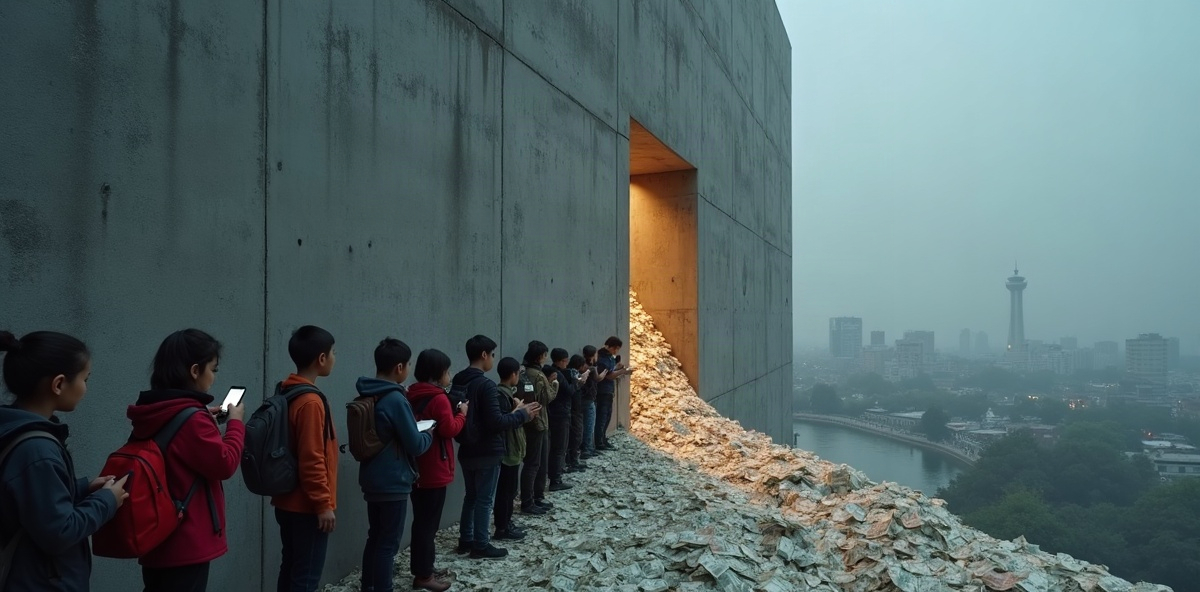
This settlement amount is woefully insignificant. As such it will not change behaviour. Rather, it will embolden.
A company stands accused of knowingly harming children over a period of years for financial gain. Nearly every state in the country sues. A trial begins. Before the chief executive has to answer questions under oath in front of a jury, a settlement is reached. The company pays a sum it can easily absorb. The company faces no criminal liability. No executive faces a personal financial penalty. No executive faces prison.
So what does Meta do? Well, being the leaders of industry that they are, these conscience-absent, ruthless, unprincipled scumbags who view every human as a dollar sign hooked up to a meat sack, reframe the settlement as - wait for it - Industry Leadership.
They said it with a straight face too. Industry. Leadership.
CJ Mahoney, Meta's chief legal officer, called the new safeguards they've agreed to put in place a template. They urged TikTok and YouTube to adopt the same framework right away.
That is a confident posture for an organisation that just agreed to pay AUD $23.6 billion to make accusations go away.
Child safety experts and some former Meta employees have already described the existing safety features Meta has introduced as little more than window dressing. So for all the back-clapping amongst the US states, really, they've hit Meta over the head with a feather.
AND BEFORE WE GET SMUG
Australia doesn't fare much better when it comes to holding these companies to account. Our government banned under-16s from social media in December 2025. More than five million accounts have since been deactivated by social media companies. A University of Newcastle study found that within three months, over 85% of under-16s surveyed were still on social media. And the maximum penalty for failing to keep them off? AUD $49.5 million.
The government is moving to raise it to AUD $99 million, which sounds serious right up until you scale it the same way we scaled the Americans. Meta's USD $201B revenue is roughly AUD $264B. Against that, AUD $99 million is a $41 fine to someone on the average wage.
Forty-one dollars. Not per child - that's the total. Forty-one dollars covering every child under sixteen still scrolling, all of them at once.
An even cheaper FoTC Licence, then.
JAIL IS THE ONLY CREDIBLE DETERRENT
Corporations don't have nervous systems. They don't feel a USD $18 billion line item over 10 years the way a person feels consequences. Shareholders absorb the hit. The cost gets priced into future planning. Risk management teams update their models. Life continues. The people who made the specific decisions at the specific meetings where the addictive features were approved, where the data collection on under-13s was signed off, where the internal research findings were reviewed and then not acted on - those people go home. They keep their money. Some of them have already moved on to other companies, other products, other rooms where decisions get made.
Until the calculation changes at the individual level, the incentive structure stays intact.
This is not a radical position. It is the same logic that applies to insider trading or fraud (for mere mortals, that is), or to negligent manslaughter. When we decided that certain corporate behaviours warranted criminal prosecution of individuals, it was precisely because fines levied against companies were not changing behaviour. The company pays. The person doesn't. The behaviour continues.
What has to happen before we decide that for a company to keep a design decision in place on a piece of software that they know harms children is not just subject to a fine, but rather a potential criminal conviction for the individuals involved?
THE STATUS QUO CONTINUES
Based on Meta's "Leadership", TikTok, YouTube and the rest will also absorb their own version of the FoTC Licence.
The next technology company watching this outcome will do its own maths. It will note that the fine is manageable, that no individual went to jail, and that the settlement came with a press release positioning the defendant as an industry leader on safety.
On the day the settlement was announced, Meta's share price rose as much as 5% intraday, closing 1% up on the day before. The market read the largest consumer protection settlement in US history and priced it as good news. That is the signal the system is sending.
Until legislatures change the personal liability framework, until prosecutors pursue individuals rather than just entities, until the person in the room where the decision was made understands that they personally bear the risk…
There will be no change.
Ben Lenzo
The Perception Check