
In 1997 I was 21, running a small videogames studio out of an office in Brighton Le Sands, Sydney Australia. I'd just flown to San Francisco to pitch a boat racing game to Electronic Arts (EA), Thunderboats! We’d build it for the coin-up/arcade industry - think Daytona on water.
They loved it. Giddy schoolgirls, the lot of them. Asked me to stay an extra day to sign a MoU. Then President of Worldwide Studios at EA, Don Mattrick happened to be visiting that day, and afterwards wrote me a handwritten letter about how he'd started out young like me too. We signed the deal. I hired staff. People moved countries to join us.
Six weeks later, the fax came through - they’d canned the game. I called my producer. He told me, "boat racing games don't sell."
Well, fuck!
That information would have been handy earlier. So much for my hand-written note.

We had worked hard on the arcade game to get it where it was, and to get a company like EA excited about it. Psst, I know I was only 21 - so it wasn’t like I’d been working in a coal mine for years - but it’s all relative. We just had some people on the other side of the planet pull the rug out from under us - presumably not the ones we'd impressed just a few short weeks ago, but “others”.
I'd put my companies’ future (and what I then thought was My Own FutureTM) in a publisher's hands and the publisher had told me to shove it where the sun don’t shine.
I had wounds to lick. And I did for a brief amount of time. I then decided that I wasn't going to run a business that remained vulnerable like that. I was going to build a company where we controlled our own destiny. Where we owned or controlled the IP, we picked the partners, we wrote the terms. Not a games studio working for publishers - a delayed payment away from disaster. No - a games studio that publishers had to work with.
It took six years.
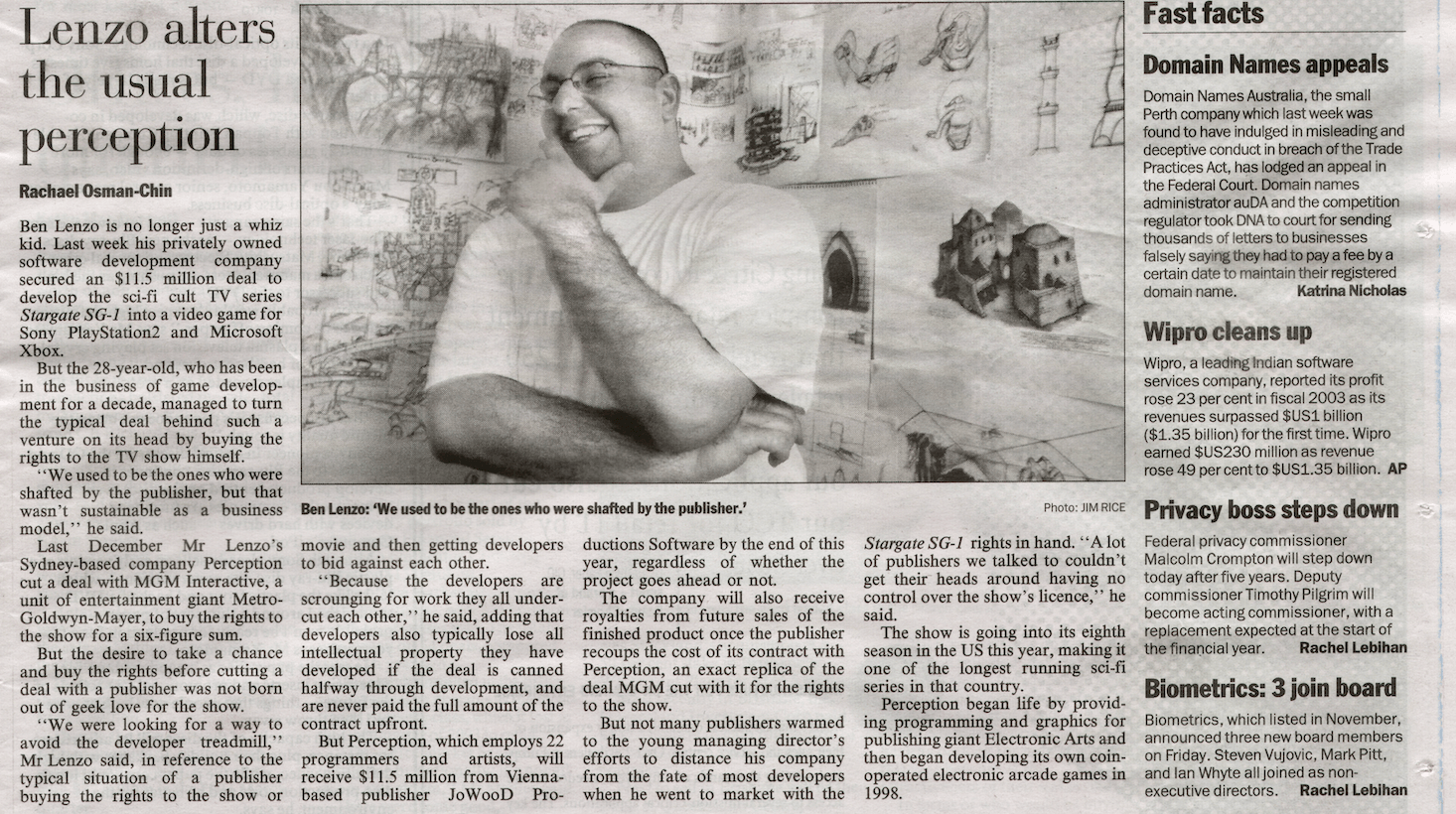
We ended up licensing the Stargate video game rights directly from MGM before going near a publisher. By the time we walked into negotiations, we had the IP, we were offering to invest cash in the publisher, and we had a development team they couldn't replicate - that’s quite the change. We signed a deal on Christmas Eve, 2003, at about 3am Sydney time (going to the office for that one was worth it). It was the largest publishing deal in Australia to that point, and was announced (early, without our consent…) by the NSW Premier, @Bob Carr. We'd gone from nobody-noticed-us to front-page.
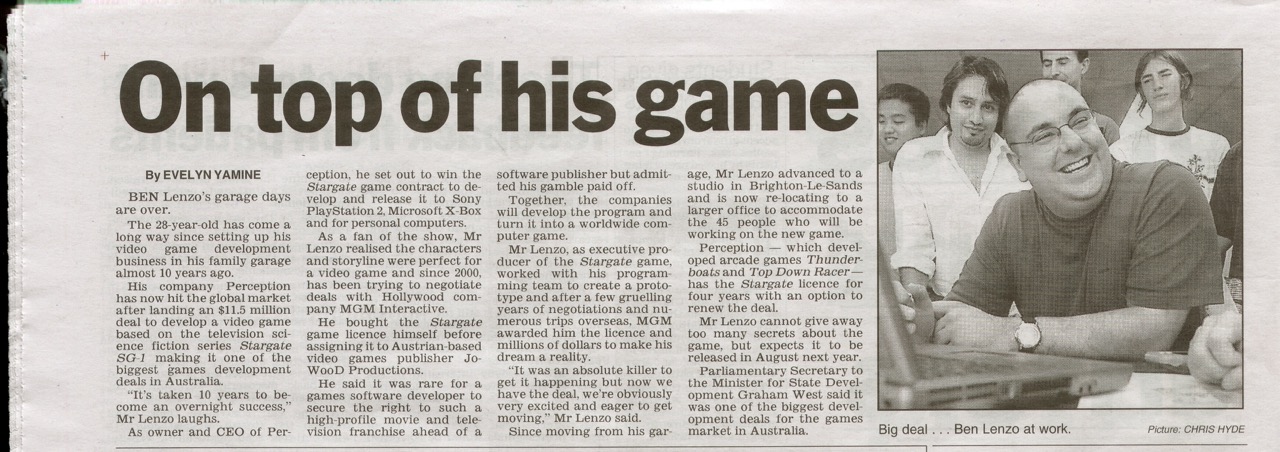
I was 27, newly engaged, running a company I loved, sitting on the deal of my career. Cash was good. The offices were new (the desks were particularly ace), and I was flying high.
In an interview with @AFR at the time, I sagely stated, after stroking my chin no doubt:
"We used to be the ones who were shafted by the publisher, but that wasn't sustainable as a business model."
Looking back, that line - while not exactly elegantly stated - did capture everything about why I'd spent six years doing what I'd been doing. What it didn't capture was what would hit me about ten months later, as I was walking to my producer’s office, past those awesome desks:
Is this it?
What struck me was how random the thought had been, and how disturbingly accurate - and... achy - it felt.
For six years I'd been operating on an assumption: when I get control, when I get the deal, when we're running the show, then it'll be alright. And here I was. I had all of it. And it was… fine. It really was fine. And fine is fine if you're fine with it. The work was good. I wasn't unhappy. But the thing I'd been chasing hadn't delivered… what I somehow thought it should be delivering??? Of course, I wouldn’t have been able to tell you then what I wanted it to actually deliver, but I just knew that “it” wasn’t.
I couldn't do much with the realisation at the time. I had a team, a publisher, a fiancée, commitments. I kept going. The work was still work I liked. It just wasn't the driver anymore - the thing that justified the long nights, the stress, and the endless barriers. I got all the ice-cream in the store, but a) got indigestion, b) didn’t really want all that ice-cream it turned out, and c) only realised that after eating all of it…
What I took away, eventually, was that the problem I'd been solving for six years wasn't actually the problem I had.
I thought I had a control problem. What I actually had was an expectation problem. I'd loaded every unanswered question in my life onto the back of one outcome, and when the outcome arrived exactly as expected, it couldn't carry what I'd asked it to carry. It was never going to. What a fizzer.
I didn’t realise it at the time, but it was a good lesson to learn - and understand - at 27.
I think about this a lot in the work I do now, helping people question the frames they're operating in.
You can read more of this each Wednesday at The Perception Check - by Ben Lenzo.
#BeAVillager